The Suzanne Project
OCD Awareness In Older Adults
What is The Suzanne Project?
The Suzanne Project is a nonprofit that works to provide free information to the older adult Community. We are a new organization, so expanding and networking are our current priority. We plan on providing this information through opportunities such as;
Volunteering/speaking at Community centers and retirement homes
Hosting events to raise awareness
Mailing information out to local communities
And more!
Our goal is to reach as many communities as possible in the upcoming year, as well as creating more mental health advocacy opportunities.
There is no one way for OCD to show up. Many of us know about the stereotypes of hand washing and organization, but OCD can also look like:
An intense fear of harm that leads to a person not leaving their home.
A worry cycle around health that leads to overly seeking medical care, or, the opposite, completely avoiding it.
Difficulty throwing things away, due to a feeling that a memory will be lost or that the item might be necessary in the future.
Existential anxiety about the future, and what will happen when we die.
Difficulty moving on from a bad experience. Dwelling, re-telling, and feeling stuck.
OCD in the older adults can be less clear. Behaviors may be seen as quirks or routines, when actually, they are part of an anxiety cycle. Older adults that are stuck in an OCD cycle might find their mental health worsening with time. OCD tends to snowball over the years, rather than naturally get better.
If you believe you or a loved one who may be displaying OCD tendencies, here’s what to do. For OCD, talk therapy is not the right treatment. Find an ERP (exposure response prevention) specialist, as talk therapy will often worsen one’s OCD as time goes on.
How can you tell that you or your loved one are experiencing OCD?
OCD and anxiety often get overlooked and minimized in every population. However, in the case of older adults, the absence of significant mental health support during their youth might have solidified unhealthy patterns quite early. Usually, OCD onset is at age 7 or at puberty, and less commonly, during adulthood. Most likely, people in the older adult community have been coping with OCD for 50+ years without truly knowing what it was. Currently, we have therapists available who are trained in this specialty treatment, though very few older adults are accessing and receiving OCD support.
Why do OCD and Anxiety get missed with older adults?
Suzanne’s Story
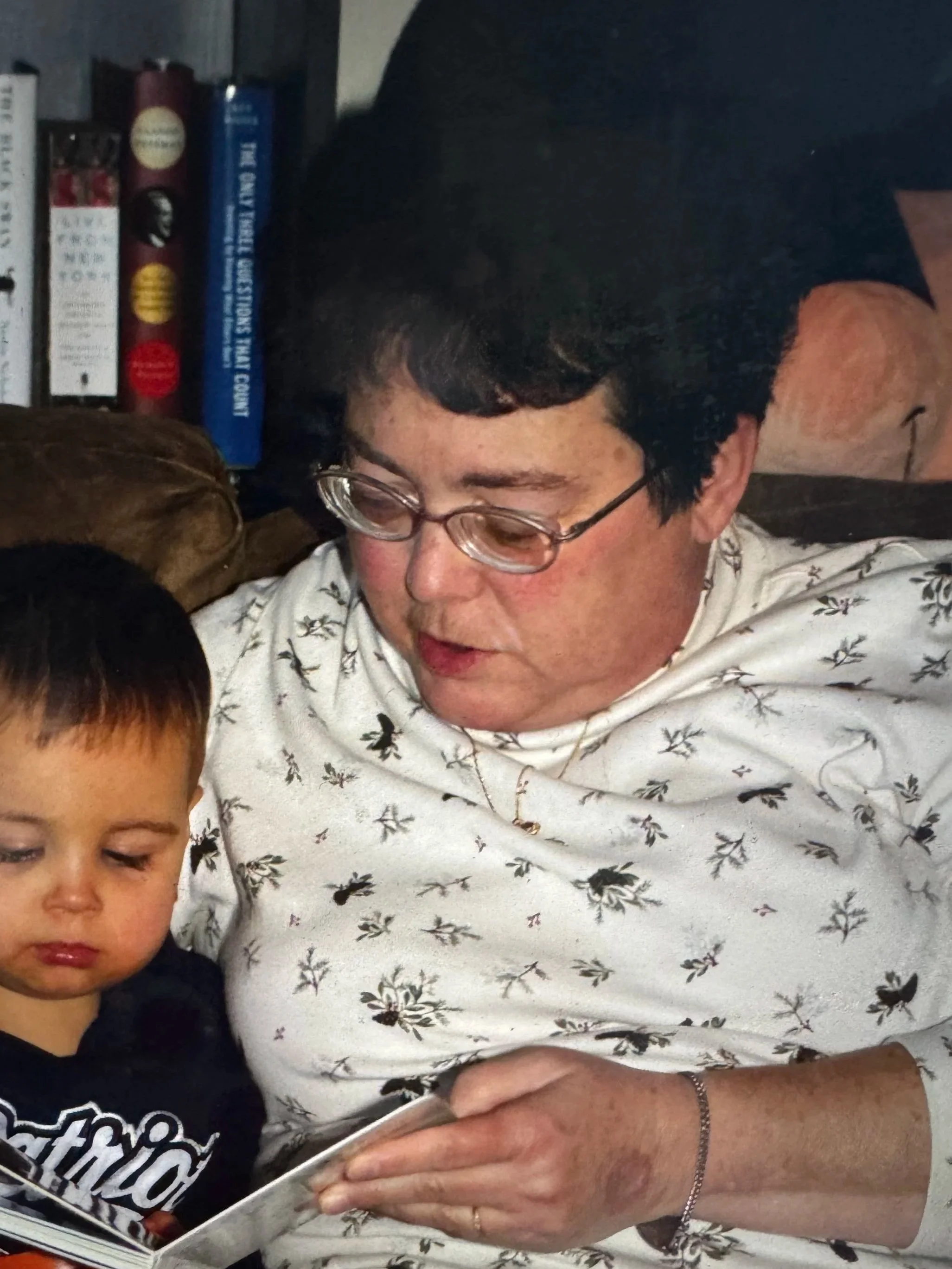
Suzanne Blanchfield was a woman who dedicated her life to helping others. Her selflessness was apparent through her careers, working as both a nurse and a teacher. Everyone who has ever met her will tell you she was the sweetest woman but very anxious. She was a beloved wife, mother, and grandmother, dedicating her last years to her grandchildren.
Suzanne has always had OCD tendencies, though she was never diagnosed. I lived with her in the summers, where she would refuse to let me do the dishes because she had her own system. When I was younger I was oblivious, but after spending time volunteering and learning about mental health, it was hard to ignore. She hoarded toys from her kids' childhoods just in case, was a perfectionist when gift giving, overthought consistently. She would reread and rewrite everything from cards, recipes, letters, and teaching materials. She was always worried about the future, her anxiety being a strong driving factor. She always had a right way for things to be done, and sometimes seemed to be trapped in her own systems. Our mission is to support those who are going through a similar experience.